Industrial Valve Exporter India: Reliable Flow Solutions
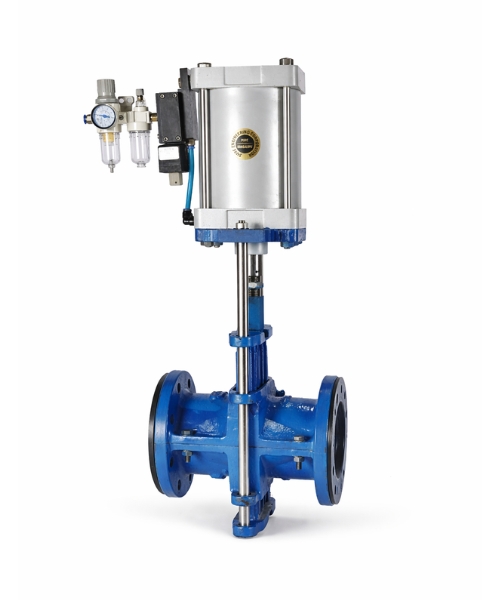
India’s industrial equipment sector is evolving rapidly as manufacturers invest in automation, energy efficiency, process safety, and dependable infrastructure. Valves and dampers are central to these developments because they regulate, isolate, redirect, or control liquids, gases, steam, and air.
A capable Industrial Valve Exporter India serves more than a shipping function. At the same time, an Industrial Valve Manufacturer India must balance material selection, dimensional accuracy, pressure performance, and application-specific design.
Why Indian Valve Manufacturing Is Gaining Attention
India has developed a broad industrial manufacturing ecosystem supported by engineering expertise, metalworking capabilities, machining facilities, and an expanding supplier network. This allows manufacturers to produce valve configurations for water treatment, chemical processing, power generation, oil and gas, pharmaceuticals, food processing, and general industrial services.
A dependable manufacturer can provide solutions tailored to pressure, temperature, media characteristics, operating frequency, and installation conditions. An Industrial Valve Manufacturer India can support standard requirements as well as engineered orders.
Key Product Considerations
Industrial valves are available in several designs. Selection should consider medium, line size, pressure class, temperature, flow characteristics, actuation method, and maintenance conditions. Butterfly valves offer compact construction and quick operation, while gate valves are commonly selected for isolation. Ball, globe, check, and control valves address different process requirements.
Dampers perform a related but distinct role in air and gas handling. An Industrial Damper Manufacturer India needs to consider blade arrangement, sealing requirements, corrosion exposure, actuator selection, and operating temperature.
Quality and Testing in Modern Manufacturing
Quality assurance is essential when sourcing flow-control equipment. Responsible manufacturers establish inspection stages covering incoming materials, machining, assembly, pressure testing, and final verification.
A professional Industrial Valve Exporter India understands that accurate paperwork and protective packaging are part of product quality. Export orders may require material certificates, dimensional reports, pressure-test records, inspection plans, or other compliance documents.
What Buyers Should Look For
When evaluating an Industrial Valve Manufacturer India or an Industrial Damper Manufacturer India, buyers should consider:
· Proven manufacturing and inspection capabilities.
· Suitable materials and application-specific configurations.
· Clear technical documentation and testing records.
· Reliable delivery planning and responsive support.
Exporters also need strong coordination between production and logistics. A supplier that communicates clearly from quotation through dispatch can reduce delays caused by incomplete technical information.
The Role of Custom Engineering
Standard products suit many applications, but industrial plants sometimes require modifications. Custom engineering may involve special materials, unusual dimensions, extended shafts, specific actuator arrangements, high-temperature construction, or enhanced sealing.
This is particularly valuable for replacement projects. A plant may need equipment that fits an existing pipeline, duct, flange arrangement, or actuator system. Instead of changing an entire installation, a manufacturer can study operating and dimensional requirements and develop a compatible solution.
Export Readiness and Global Demand
International buyers increasingly expect Indian suppliers to demonstrate consistency, transparency, and dependable delivery. An Industrial Valve Exporter India can strengthen its position through organized quality records, suitable export packaging, and accurate commercial and technical documentation.
Global demand is influenced by modernization projects, water infrastructure, renewable energy, industrial automation, and environmental-control systems. Manufacturers that invest in engineering development, testing infrastructure, digital production systems, and customer support are better positioned to serve changing demand.
Practical procurement also benefits from clear communication before production begins. Buyers should share drawings, operating parameters, connection details, material preferences, expected quantities, and delivery requirements as early as possible. This gives the engineering team enough information to confirm suitability and identify potential issues before manufacturing. It also creates a clearer basis for inspection and acceptance. In competitive industrial markets, dependable communication can be as valuable as competitive pricing because it supports predictable project execution and long-term equipment performance. For overseas projects, this disciplined approach can simplify coordination between plant engineers, procurement teams, inspectors, freight partners, and end users. It helps ensure that technical expectations remain consistent from quotation to commissioning, while reducing avoidable corrections, delays, and misunderstandings. It supports confidence in every delivered order over time.
FAQs
What industries commonly use industrial valves?
Industrial valves are widely used in power, chemical processing, water treatment, oil and gas, pharmaceuticals, food processing, cement, HVAC, and manufacturing facilities. The exact design depends on the process medium and operating conditions.
How should an industrial valve be selected?
Selection should consider pressure, temperature, media, pipe size, flow requirements, material compatibility, operating frequency, and actuation. Technical consultation can help ensure the valve is correctly sized and suitable for service.
What does an industrial damper control?
Industrial dampers generally regulate or isolate air and gases. They are used in ventilation, exhaust, combustion, dust collection, and flue-gas systems where controlled airflow is important.
Why is testing important for industrial valves?
Testing helps verify pressure integrity, sealing performance, dimensions, and functional reliability. Proper inspection can identify manufacturing issues before equipment reaches the operating plant.
Why are Indian suppliers competitive?
Indian manufacturers benefit from established engineering capabilities, diverse industrial suppliers, manufacturing experience, and growing quality infrastructure. Competitive pricing combined with customization and export support can make them attractive to international buyers.
Conclusion
India’s industrial flow-control sector is increasingly capable of serving domestic and international requirements. Choosing the right Industrial Valve Exporter India, Industrial Valve Manufacturer India, or Industrial Damper Manufacturer India requires attention to engineering quality, testing, materials, documentation, customization, and service rather than price alone. As industries pursue safer, more efficient, and better-controlled operations, dependable valves and dampers will remain essential components. Suppliers that combine manufacturing discipline with technical understanding and export readiness can build lasting value for customers across diverse markets.
Comments