Shiva Statues for Home: Spiritual Significance, Divine Forms and the Art of Choosing the Perfect Mahadev Idol
Lord Shiva, lovingly known as Mahadev, Bholenath, and Adiyogi, holds a special place in Hindu spirituality. He represents transformation, wisdom, meditation, strength, and the eternal balance of the universe. His divine personality inspires millions of devotees to embrace simplicity, develop inner strength, and find peace beyond everyday challenges.
Shiva statues are among the most admired forms of traditional Indian religious art. From the peaceful Adiyogi to the magnificent Nataraja and sacred Shivling, every representation of Lord Shiva carries a distinctive meaning. These sculptures combine spiritual symbolism with artistic craftsmanship, making them meaningful additions to homes, temples, offices, and meditation spaces.
Today, Shiva idols are also appreciated as elegant decorative pieces that bring Indian cultural heritage into modern interiors. Whether you are looking for a traditional Mahadev Murti for worship or an artistic sculpture for your living room, choosing the right Shiva statue can add a personal and meaningful touch to your surroundings.
In this article, discover the significance of Shiva statues, their different forms, popular symbols, placement ideas, and helpful tips for choosing the right idol.
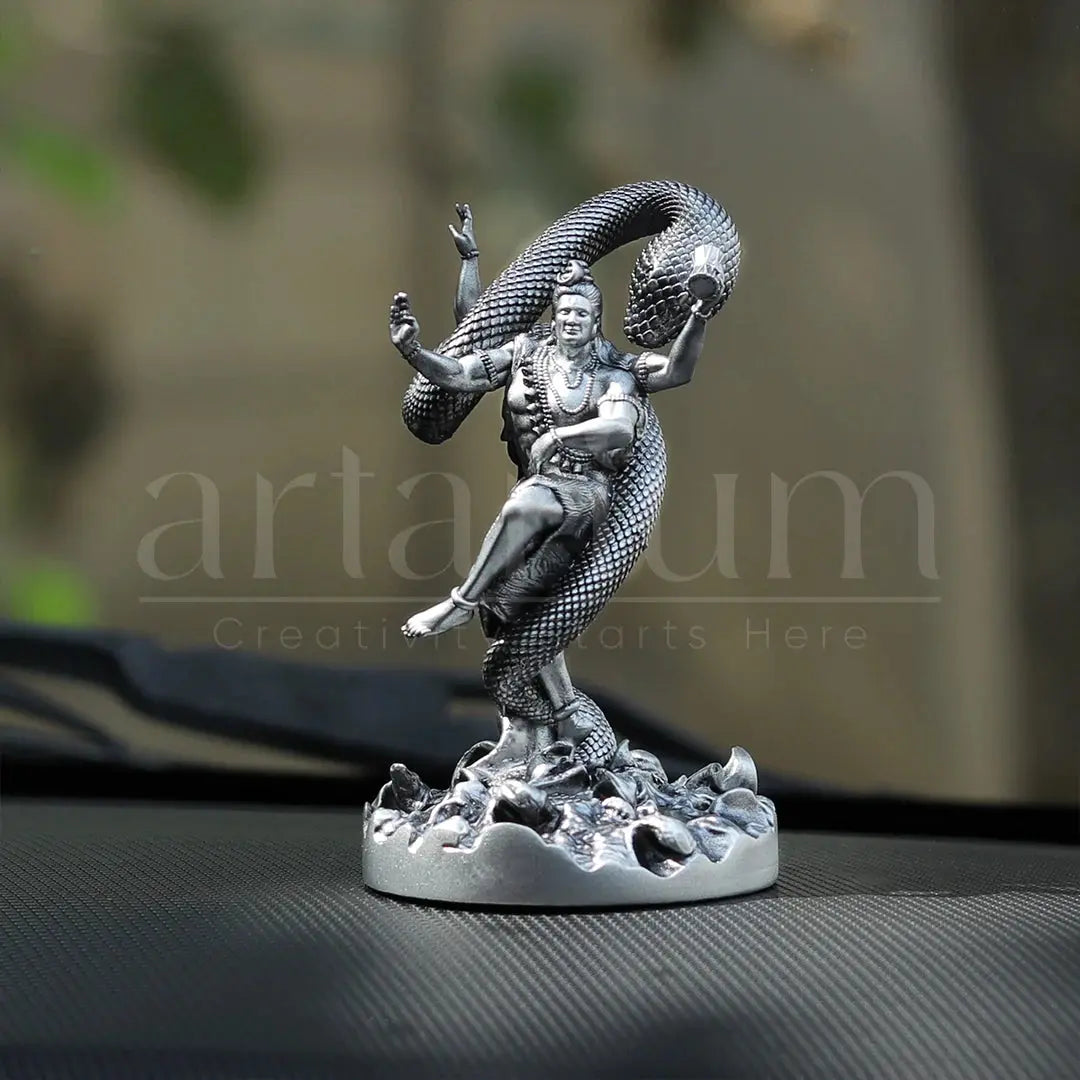
1. Understanding the Spiritual Significance of Lord Shiva
In Hinduism, Lord Shiva is one of the principal deities of the Trimurti, alongside Brahma and Vishnu. He is associated with transformation and the destruction of negativity, representing the continuous cycle of creation, preservation, and renewal.
Shiva's divine nature teaches the importance of letting go of unnecessary attachments, overcoming ignorance, and developing spiritual awareness. He is also known as Adiyogi, the first yogi, and is closely associated with meditation and self-realisation.
A Shiva statue represents these timeless teachings through its posture, expression, and symbolic elements. His calm face reflects inner peace, while his powerful appearance represents strength and the ability to overcome challenges.
For devotees, a Shiva Murti is a meaningful symbol of faith and devotion. For art enthusiasts, it represents the beauty of Indian sculpture and traditional craftsmanship.
2. Popular Forms of Shiva Statues and Their Meanings
Lord Shiva is worshipped in several forms, each representing a different aspect of his divine personality. Understanding these forms can help you select an idol according to your preferences.
Meditating Shiva Statue – The Symbol of Inner Peace
A meditating Shiva statue depicts Mahadev sitting in a peaceful yogic posture. His closed eyes and composed expression represent concentration, wisdom, discipline, and spiritual awareness.
This form is particularly meaningful for people interested in yoga, meditation, and mindfulness. A meditating Shiva idol can be displayed in a home temple, meditation room, yoga studio, or peaceful corner.
Nataraja Statue – The Cosmic Dance of Lord Shiva
Nataraja is the dancing form of Lord Shiva. His cosmic dance represents the continuous rhythm of the universe and the interconnected processes of creation, preservation, destruction, and liberation.
Traditional Nataraja sculptures show Shiva dancing within a circular ring of flames. The Damru represents creation, while the flame represents destruction and transformation.
These statues are admired for their intricate craftsmanship, movement, and artistic beauty.
Shivling – The Sacred Symbol of Mahadev
The Shivling is one of the most sacred representations of Lord Shiva. It symbolises the infinite and formless nature of the divine.
Unlike idols depicting Shiva in human form, the Shivling represents divine energy through a simple and meaningful structure. It is traditionally worshipped in Hindu temples and home prayer spaces.
Shiv Parivar – A Symbol of Family Harmony
The Shiv Parivar depicts Lord Shiva, Goddess Parvati, Lord Ganesha, and Lord Kartikeya together as a divine family.
It represents love, unity, harmony, and togetherness. A Shiv Parivar Murti is a meaningful addition to a family prayer room and a thoughtful gift for housewarming ceremonies and weddings.
Ardhanarishvara – The Union of Shiva and Shakti
Ardhanarishvara represents Lord Shiva and Goddess Parvati in a unified form. It symbolises the complementary nature of masculine and feminine energies, balance, and cosmic harmony.
This distinctive representation is admired for its philosophical meaning and artistic expression.
3. Understanding the Sacred Symbols of Shiva
One of the most fascinating aspects of Shiva statues is the symbolism associated with Mahadev's appearance. Each traditional element has a deeper meaning.
Trishul: Represents divine strength and power.
Damru: Symbolises the rhythm of creation and cosmic sound.
Third Eye: Represents higher knowledge and spiritual awareness.
Crescent Moon: Symbolises time and renewal.
Serpent: Represents fearlessness and control over worldly attachments.
Ganga: Represents purity and spiritual cleansing.
Nandi: Symbolises devotion, patience, and dedication.
These elements make Shiva sculptures meaningful works of art that connect mythology, spirituality, and Indian cultural heritage.
4. Why Choose a Shiva Statue for Your Home?
A Lord Shiva statue combines spiritual significance, cultural heritage, and decorative elegance. Here are some reasons why people choose Shiva idols for their homes.
A Symbol of Peace: The calm appearance of Lord Shiva represents meditation and inner tranquillity. A meditating Shiva sculpture can serve as a reminder to maintain balance and patience in everyday life.
Represents Strength: Mahadev symbolises the ability to overcome negativity and embrace transformation. His divine form inspires courage, determination, and confidence.
Creates a Spiritual Environment: A Shiva Murti in a dedicated prayer space can make daily worship and meditation more meaningful.
Enhances Interior Decoration: Shiva statues are available in different artistic styles, sizes, and finishes. They can complement traditional Indian interiors as well as contemporary homes.
Preserves Indian Heritage: Traditional Shiva sculptures reflect centuries of Indian religious art, mythology, and craftsmanship.
5. How to Choose the Perfect Shiva Statue?
Buying a Shiva statue is a personal choice. Whether you want an idol for worship or decoration, consider these important factors before making a purchase.
Choose the Right Form: Select a design that reflects your preferences. A meditating Shiva is suitable for peaceful spaces, a Nataraja sculpture adds artistic character, and a Shivling is traditionally associated with worship.
Consider the Size: Small Shiva idols are suitable for compact prayer spaces, shelves, and desks. Larger sculptures can become beautiful focal points in spacious rooms and dedicated temples.
Select the Material: Shiva statues are available in brass, metal, stone, resin, and other materials. Each offers a different appearance and maintenance requirement.
Check the Craftsmanship: Look for carefully finished details, balanced proportions, expressive facial features, and well-defined symbolic elements.
Consider the Finish: Antique, black, golden, bronze, and silver-toned finishes can complement different interior styles. Select one that matches your surroundings.
6. Best Places to Keep a Shiva Statue
The placement of a Shiva statue depends on its form, intended purpose, and personal or family traditions.
Home Temple: A dedicated prayer room is a traditional location for a Shiva Murti and daily worship.
Meditation Room: A meditating Shiva idol can complement a peaceful environment for yoga and mindfulness.
Living Room: Decorative Shiva sculptures can be displayed on shelves, console tables, or dedicated display units.
Office: A small Shiva idol can add a personal spiritual touch to a workspace.
Garden: Outdoor Shiva sculptures can create an attractive spiritual setting when protected from harsh weather.
Always keep religious idols in a clean and respectful location. If you follow Vastu Shastra or particular religious customs, consult a knowledgeable practitioner for placement guidance.
7. Shiva Statues and the Beauty of Indian Craftsmanship
Indian sculpture has a rich history of expressing religious beliefs through artistic creativity. Shiva statues are among the finest examples of this cultural tradition.
From ancient stone carvings to detailed bronze sculptures, Indian artisans have represented Mahadev in numerous forms. The Nataraja sculptures associated with the Chola period of South India are particularly celebrated for their balanced proportions, intricate detailing, and dynamic movement.
These sculptures combine religious symbolism with exceptional artistic skill. Every element, from Shiva's dancing posture to the surrounding ring of flames, communicates a deeper philosophical meaning.
Modern Shiva statues continue to draw inspiration from traditional designs. Contemporary artisans use different materials, textures, and finishes to create sculptures that suit modern living spaces while preserving their traditional identity.
A beautifully designed Shiva idol can therefore be both a meaningful religious representation and an attractive piece of Indian art.
8. Shiva Statues as Meaningful Gifts
A Lord Shiva statue is a thoughtful gift for anyone who appreciates spirituality, Hindu traditions, and Indian craftsmanship.
Here are some occasions when a Mahadev idol can make a memorable present:
Maha Shivratri: A meaningful gift for devotees celebrating Lord Shiva.
Housewarming: A beautiful addition to a new home or prayer room.
Wedding: A Shiv Parivar sculpture represents family unity and harmony.
Festivals: A thoughtful spiritual gift during Diwali and other celebrations.
Birthdays and Anniversaries: An elegant sculpture for someone who appreciates traditional religious artwork.
When choosing a Shiva statue as a gift, consider the recipient's preferences, available space, and religious traditions.
9. Discover Beautiful Shiva Statues Online at Artarium
If you are looking for a Shiva statue that combines traditional inspiration, artistic beauty, and spiritual significance, explore the collection at Artarium.
The Artarium Shiva Statue Collection features distinctive representations of Mahadev, including Shiv-Lingam idols, Mystical Shiva sculptures, Trishul designs, Damru-inspired idols, and other beautiful forms.
Whether you want a traditional Mahadev Murti for your home temple, a decorative Shiva sculpture for your living room, or a thoughtful spiritual gift, you can explore designs that reflect your personal preferences.
A Shiva statue is more than an ordinary decorative accessory. It represents devotion, transformation, Indian heritage, and centuries of artistic tradition.
Frequently Asked Questions About Shiva Statues
1. Which Shiva statue is best for home?
A meditating Shiva statue is a popular choice for peaceful spaces. A Shivling is traditionally associated with worship, while Nataraja and Shiv Parivar statues are also meaningful options.
2. What does a Shiva statue symbolise?
A Shiva statue represents transformation, wisdom, meditation, spiritual awareness, and the eternal cycle of creation and destruction.
3. Can I keep a Shiva statue in my living room?
Yes. Decorative Shiva statues can be displayed in living rooms, provided they are kept in a clean and respectful location.
4. What is the significance of the Trishul in a Shiva statue?
The Trishul represents divine strength and power. It is one of the most recognisable symbols associated with Lord Shiva.
5. Which material is suitable for a Shiva Murti?
Brass, metal, stone, and resin are popular materials. The best option depends on your design preference, budget, intended use, and maintenance requirements.
6. Is a Shiva statue a good housewarming gift?
Yes. A Shiva Murti is a thoughtful housewarming gift for someone who appreciates Indian traditions, spirituality, and religious artwork.
7. How should I maintain a Shiva statue?
Use a soft cloth for regular dusting. Follow the material-specific care instructions and avoid harsh chemicals or abrasive cleaning products.
Comments